
Career Development & Digital Skills
How to Build a Career in AI Without a Tech Degree in 2026
July 25, 2026
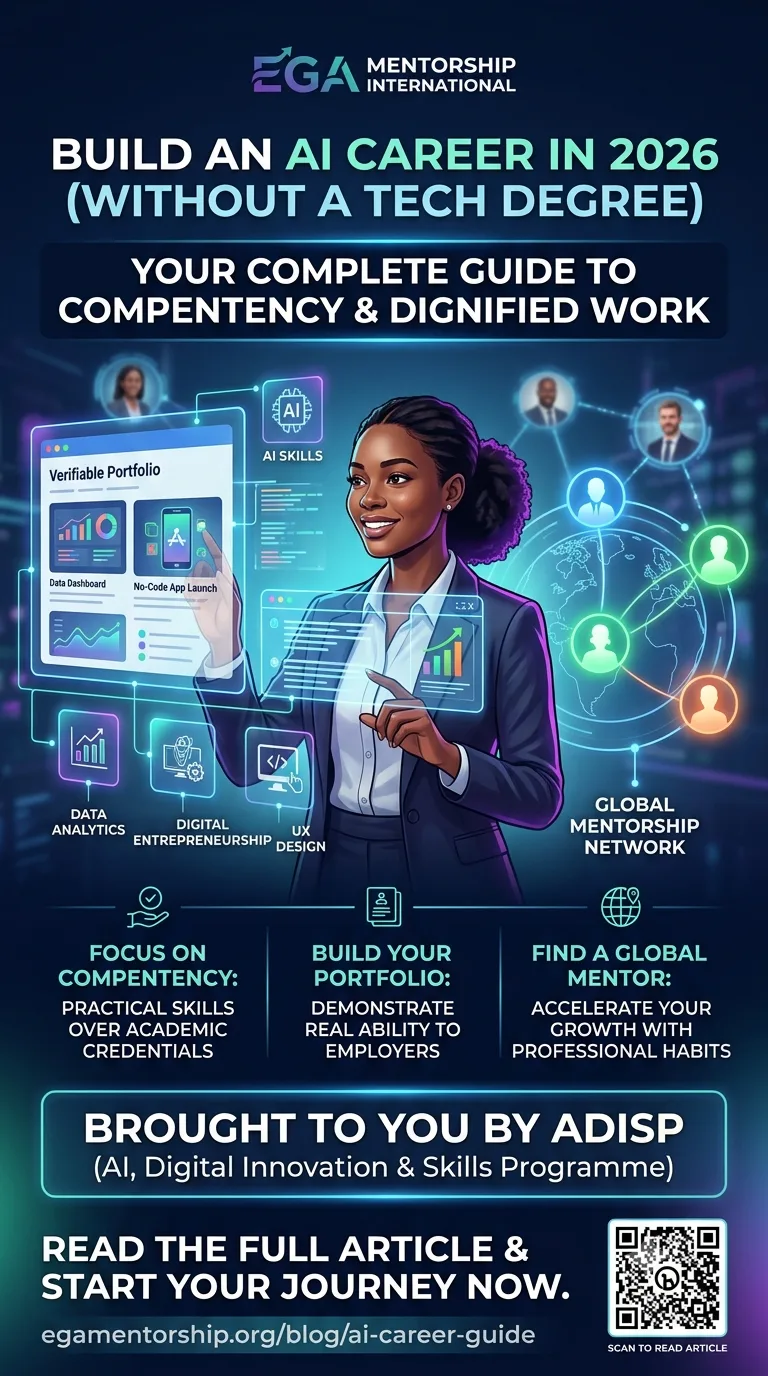
The artificial intelligence revolution isn't just happening in Silicon Valley,it is a global shift creating thousands of opportunities in emerging markets. But for many ambitious young leaders, a common barrier holds them back: the belief that they need a traditional, four-year computer science degree to get started.
In 2026, the tech industry is shifting its focus from academic credentials to practical competency. If you want to break into AI and digital innovation, here is how you can build a sustainable, future-proof career,and why finding the right mentorship is your strongest advantage.
1. Focus on Competency Over Credentials
The modern digital economy values what you can do over where you studied. Instead of focusing on passing exams, successful tech professionals learn by building real things.
When you learn AI-native digital skills, the goal should be to demonstrate real ability. Mastering the software is just the foundation; learning how to apply human judgment to AI outputs is what makes you highly employable in the current market.
2. Target High-Demand, Accessible Tech Tracks
You do not need to be a mathematician to work in tech. There are multiple remote tech pathways that cater to different strengths and do not require heavy coding backgrounds:
Data & AI Analytics: Turning raw data into actionable insights through visualization and applied machine learning.
Digital Product & UX Design: Designing human-centered interfaces and AI-assisted digital products.
Digital Entrepreneurship & No-Code: Building and launching a working app or business model using no-code platforms and AI tools.
Digital Marketing & Content: Growing global audiences using SEO, social media, and AI-assisted marketing strategies.
3. Build a Verifiable Portfolio
Certificates of completion are no longer enough to stand out to global employers. Today, clients and recruiters want to see a genuine portfolio of work.
The best way to prove your digital innovation skills is to ship real products. Instead of a theoretical resume, your goal should be to show a live marketing campaign, a data analysis dashboard, or a documented API. Practical, project-based building under professional conditions is the fastest way to bridge the gap between learning and dignified work.
4. Find a Global Mentor
Navigating a self-taught tech career can be isolating. This is where mentorship becomes the engine of your growth.
A mentor provides more than just technical help; they offer strategic career advice, accountability, and a connection to a wider professional network. Finding a mentor who understands the global landscape can help you align your skills with international standards and the UN Sustainable Development Goals (SDGs).
Ready to Start Your Journey?
If you are a young leader looking to transition into the tech industry, the AI, Digital Innovation & Skills Programme (ADISP) by EGA Mentorship International is designed exactly for this.
We equip youth with practical, AI-native skills through a competency-based, mentorship-led pathway. You will not just earn a certificate—you will graduate with a real portfolio, personalized guidance from global mentors, and the professional habits needed to secure dignified work.
Written by

RICHARD MENSAH
More from the blog
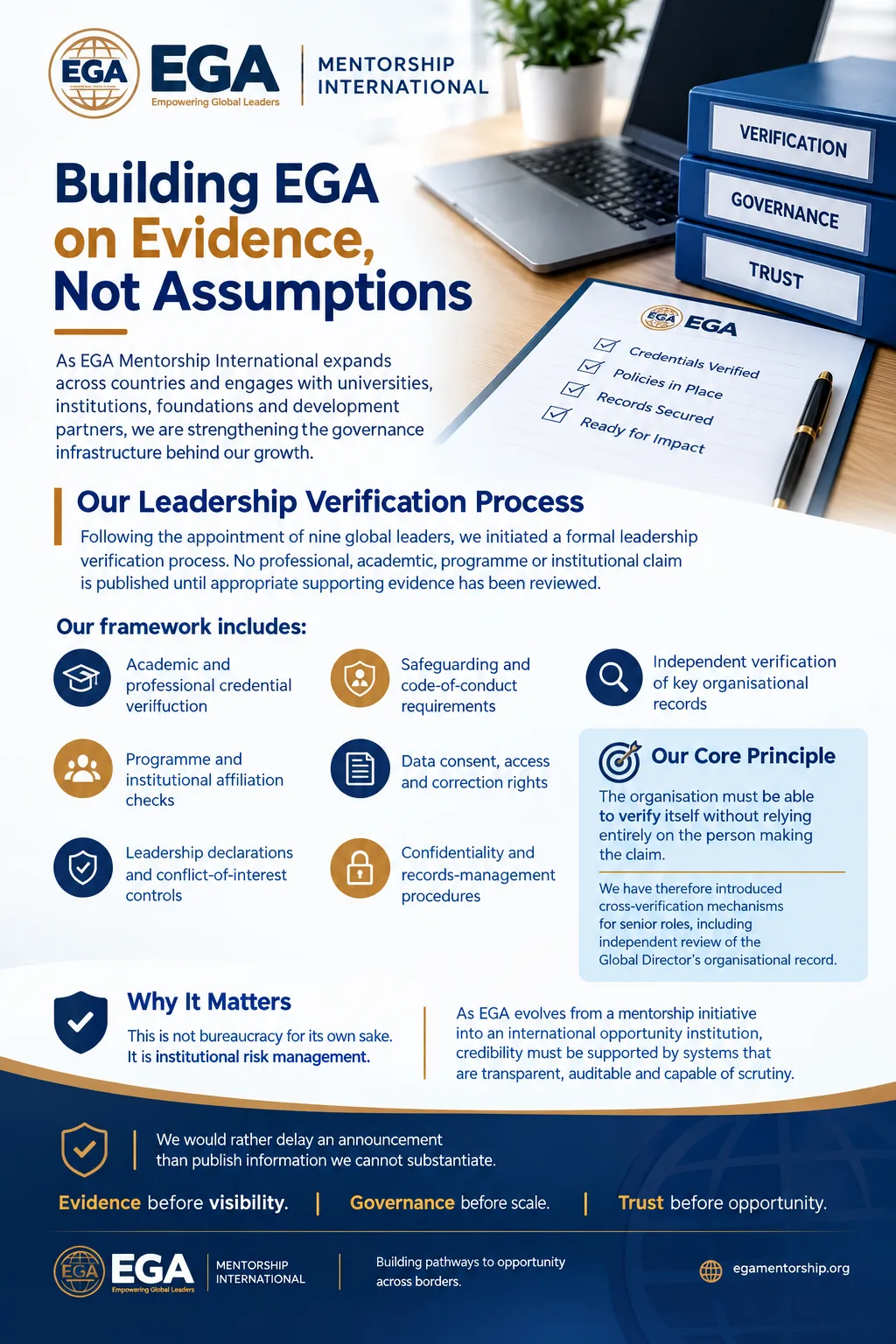
Leadership & Governance
The Cost of Trust: Why EGA Chose to Verify Its Own Organisation
EGA Mentorship International explains why it independently verified its newly appointed leaders before publishing their profiles, placing evidence, integrity and accountability ahead of publicity.
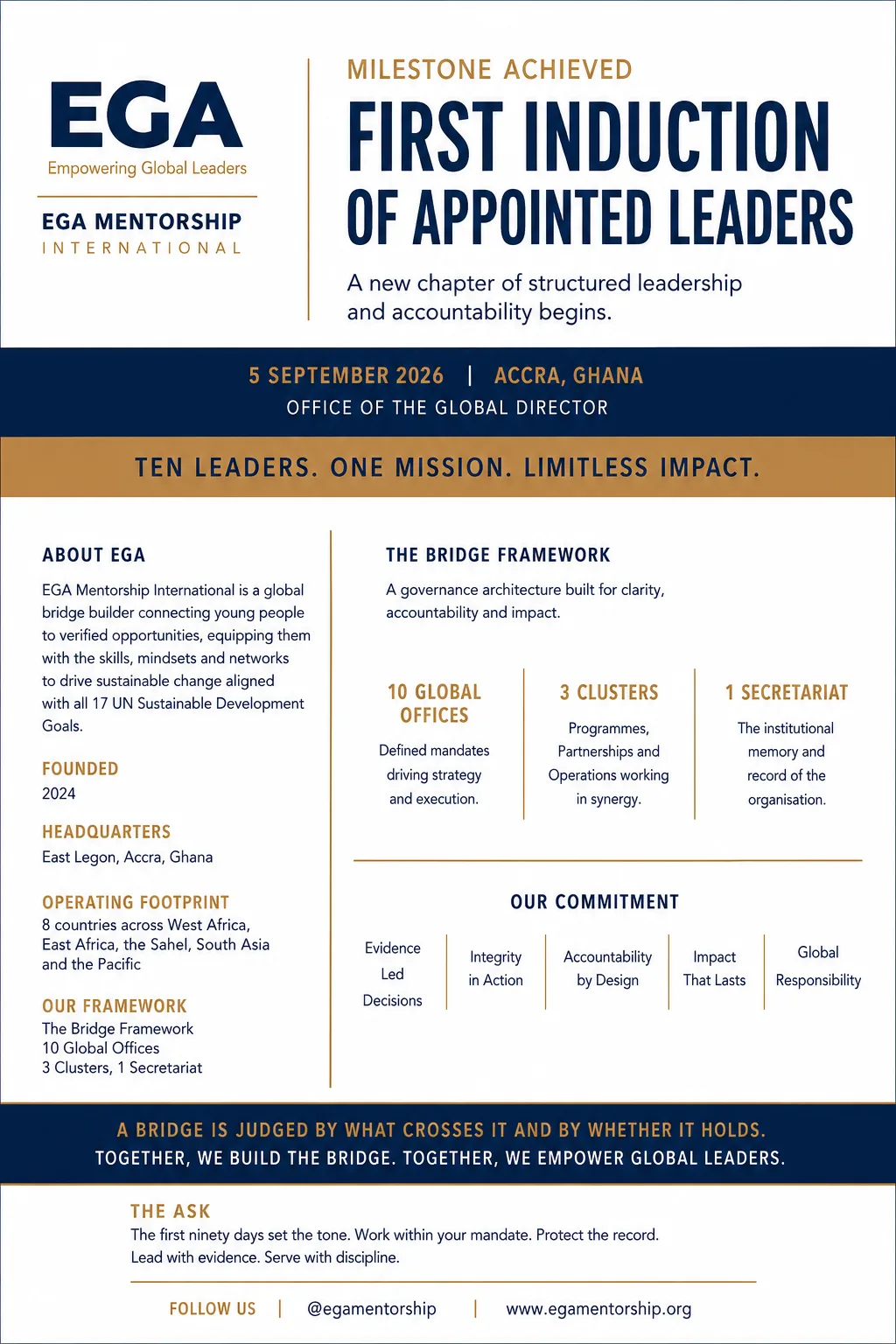
Leadership & Governance
First Induction of Appointed Leaders | Date: 5 September 2026 | Location: Accra, Ghana
EGA Mentorship International marks a major institutional milestone with the first induction of its appointed leaders, strengthening its governance structure, accountability and commitment to empowering young global leaders.
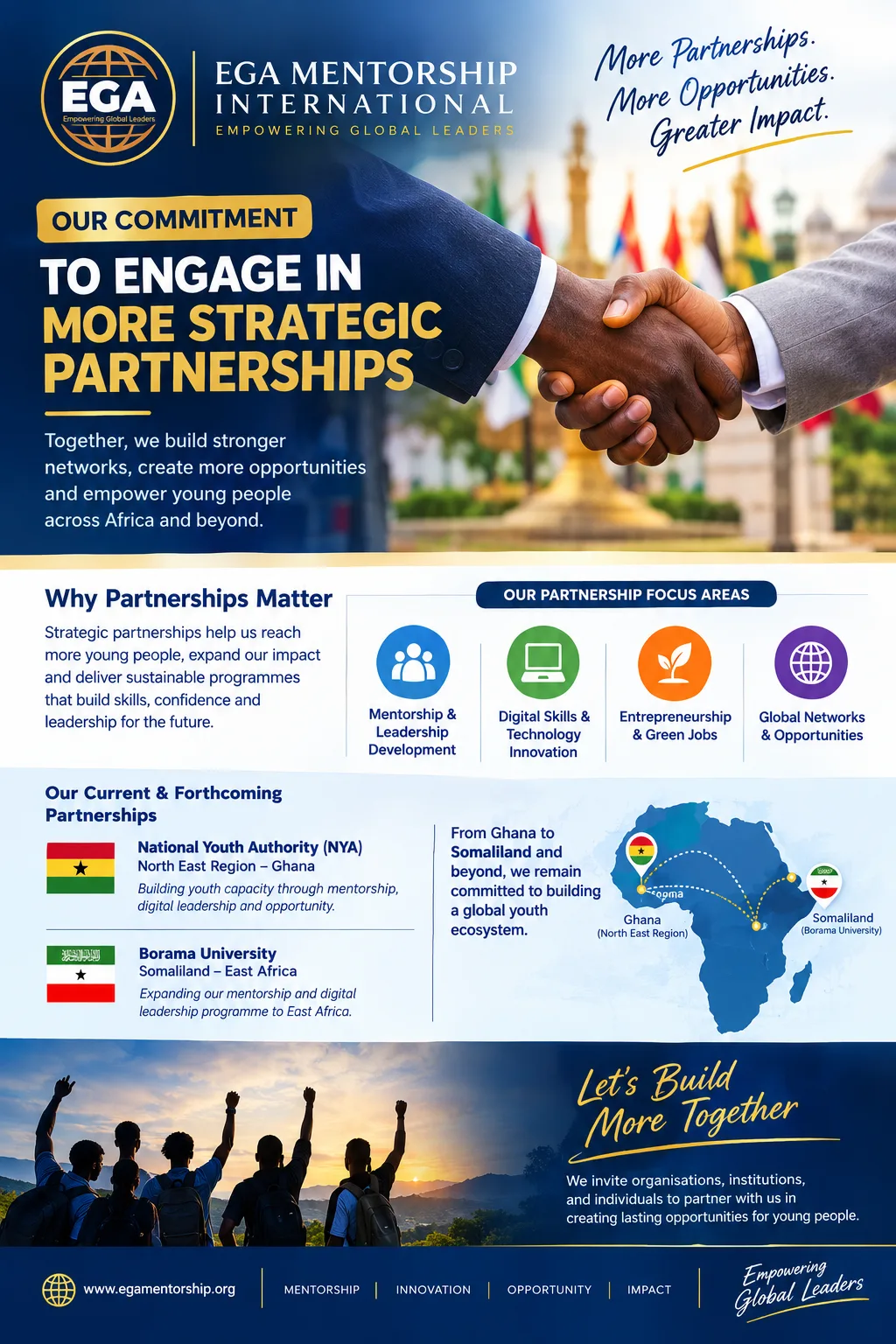
Strategic Partnerships
EGA Mentorship International Deepens Strategic Partnerships to Expand Youth Opportunities Across Africa
EGA Mentorship International strengthens its strategic partnership engagement with Ghana’s National Youth Authority and looks ahead to expanding its Mentorship and Digital Leadership Programme to Borama University in Somaliland.